


Paris Olympics 2024: List of India’s Olympic Medal Winners

The Paris Olympics 2024 is just round the corner and India is all set to display their extraordinary skills and bag a lot of medals. India has a rich history in the Olympic Games, with athletes showcasing remarkable performances across various disciplines. From the early days of participating in the Olympics to the more recent editions, Indian athletes have achieved significant milestones. Here is a comprehensive list of India’s Olympic medalists, detailing the winners, the events they excelled in, and the editions of the Games in which they triumphed. 1. Norman Pritchard – 1900 Paris Olympics: 2 Silver Medals Norman Pritchard became the first Indian to win Olympic medals by securing silver in both the 200 meters and 200 meters hurdles. His achievement marked the beginning of India’s journey in the Olympic Games, setting a precedent for future athletes to follow. 2. Men’s Field Hockey Team – 1928 Amsterdam Olympics: Gold Medal India won its first Olympic gold medal in field hockey, beginning a golden era in the sport. The team displayed exceptional skill and coordination, dominating their opponents and setting a high standard for future generations. 3. Men’s Field Hockey Team – 1932 Los Angeles Olympics: Gold Medal Continuing their dominance, the Indian men’s field hockey team secured another gold medal. Their performance in the 1932 Olympics further established India as a powerhouse in field hockey, with their seamless teamwork and strategic gameplay. 4. Men’s Field Hockey Team – 1936 Berlin Olympics: Gold Medal The team won their third consecutive gold medal, further solidifying their supremacy. Their unmatched prowess on the field during this period is a proud chapter in India’s Olympic history, demonstrating their consistent excellence. 5. Men’s Field Hockey Team – 1948 London Olympics: Gold Medal Post-independence, India’s hockey team clinched the gold, maintaining their winning streak. This victory was particularly significant as it symbolized a new era for the nation and showcased the enduring strength of Indian hockey. 6. K.D. Jadhav – 1952 Helsinki Olympics: Bronze Medal K.D. Jadhav became the first Indian individual to win an Olympic medal in wrestling. His dedication and hard work paved the way for future Indian wrestlers on the international stage, highlighting the potential of Indian athletes in diverse sports. 7. Men’s Field Hockey Team – 1956 Melbourne Olympics: Gold Medal India’s field hockey team continued their golden run with another top podium finish. Their consistent success highlighted the team’s exceptional talent and dedication to the sport, contributing to India’s legacy in Olympic history. 8. Men’s Field Hockey Team – 1960 Rome Olympics: Silver Medal The team won a silver medal, marking the end of their consecutive gold streak. Despite not winning gold, their performance remained commendable and showcased their resilience and adaptability in the face of strong competition. 9. Men’s Field Hockey Team – 1964 Tokyo Olympics: Gold Medal India’s hockey team reclaimed the gold medal, demonstrating their determination and skill. This victory reinstated their position as champions in the sport and was a testament to their unwavering commitment to excellence. 10. Men’s Field Hockey Team – 1968 Mexico City Olympics: Bronze Medal The team secured a bronze medal in the competition. Their ability to remain among the top teams in the world was a testament to their enduring talent and hard work, ensuring that India remained a formidable force in field hockey. 11. Men’s Field Hockey Team – 1972 Munich Olympics: Bronze Medal India’s field hockey team won another bronze medal. Their continued presence on the Olympic podium underscored their lasting excellence in the sport and their ability to compete at the highest level consistently. 12. Men’s Field Hockey Team – 1980 Moscow Olympics: Gold Medal The team clinched the gold medal, marking their eighth and last Olympic gold in field hockey. This victory was a fitting end to an era of unparalleled dominance, celebrating their legacy as one of the greatest teams in Olympic history. 13. Leander Paes – 1996 Atlanta Olympics: Bronze Medal Leander Paes won a bronze, becoming the first Indian to win an Olympic medal in tennis. His achievement inspired a new generation of tennis players in India and highlighted the potential for Indian athletes in a variety of sports. 14. Karnam Malleswari – 2000 Sydney Olympics: Bronze Medal Karnam Malleswari made history by becoming the first Indian woman to win an Olympic medal. Her success brought attention to women’s sports in India and encouraged more female athletes to pursue their dreams, breaking new ground for future generations. 15. Rajyavardhan Singh Rathore – 2004 Athens Olympics: Silver Medal Rajyavardhan Singh Rathore’s silver marked a significant achievement in shooting for India. His precise skills and determination were a source of national pride, demonstrating the growing prowess of Indian shooters on the international stage. 16. Abhinav Bindra – 2008 Beijing Olympics: Gold Medal Abhinav Bindra became the first Indian individual gold medalist. His historic win in shooting was a moment of immense pride for the nation, showcasing the highest level of dedication and excellence in his sport. 17. Vijender Singh – 2008 Beijing Olympics: Bronze Medal Vijender Singh’s bronze was a landmark in Indian boxing. His achievement highlighted the potential of Indian boxers on the global stage, encouraging a new wave of talent in the sport. 18. Sushil Kumar – 2008 Beijing Olympics: Bronze Medal Sushil Kumar added to India’s medal tally in wrestling. His performance was a testament to his skill and dedication to the sport, paving the way for future success in Indian wrestling. 19. Sushil Kumar – 2012 London Olympics: Silver Medal Sushil Kumar became the first Indian to win two individual Olympic medals. His consistency and excellence were celebrated across the country, marking him as one of India’s greatest Olympians. 20. Vijay Kumar – 2012 London Olympics: Silver Medal Vijay Kumar’s silver was a proud moment for Indian shooting. His precise aim and focus earned him a well-deserved place on the podium, adding to India’s growing reputation in the sport. 21. Gagan Narang – 2012 London Olympics: Bronze Medal Gagan Narang
Paris Olympics 2024: Neeraj Chopra Focused And Ready
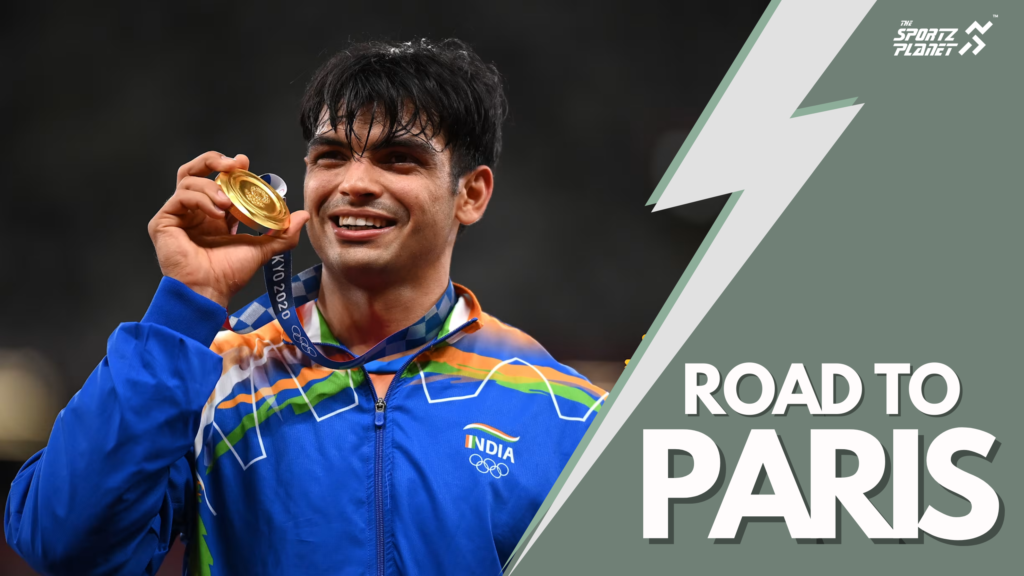
With less than a month left before the start of Paris Olympics 2024, Neeraj Chopra is diligently working away from the public eye, fine-tuning his technique. Concerns have been raised about his limited competition participation this season, but Chopra remains confident in his decision to prioritize his health over frequent competitions. Prioritizing Health Over Competition “This is the time to fix and improve things,” Neeraj told ESPN in an exclusive conversation. He explained that his current training regimen in Saarbrucken, Germany, has shifted to high-intensity sessions designed to peak his performance for the Olympics. “My workouts are less in volume now but will be at a high level, and my body will be at its peak.“ Addressing Groin Injury Concerns Chopra’s main focus has been on reducing the impact on the groin muscle of his blocking leg, crucial for transferring momentum during his throws. A groin injury had sidelined him from the Commonwealth Games last year and resurfaced in May, causing discomfort in his adductor. To mitigate this, he has limited his competitions to just three this year, compared to five before the Tokyo Olympics. Experience Brings Wisdom Reflecting on his journey, Chopra noted that his mindset has evolved since the Tokyo Olympics. “Back then, if I had an entry in a competition, I would definitely go and compete no matter what happened. But now, with more experience, I am better placed to make correct decisions,” he said. This maturity has led him to prioritize his body’s health and pause training if he feels discomfort. Strategic Competition Participation Neeraj Chopra’s selective participation saw him withdraw from the Ostrava Golden Spike in May and skip the Paris Diamond League. His performances at the Federation Cup (82.27m) and the Paavo Nurmi Games (85.97m) were among his lowest since becoming Olympic champion, but these were strategic decisions. “At the Federation Cup, I didn’t really feel I needed to perform. Bhubaneswar’s heat and the travel made it difficult to give my 100%.“ Building Confidence for the Runway The groin injury necessitated a break in his training, however Chopra returned to compete at the Paavo Nurmi Games, focusing on his body’s response rather than the throw distance. “I was slow on the runway compared to my normal speed. I want that speed back and for that, I need proper confidence that I am fully fit.“ Looking Forward to Paris Despite a mixed season, Chopra’s 88.36m throw at the Doha Diamond League ranks #4 globally in 2024, underscoring his potential. He remains positive and enjoys the routine of an athlete’s life, even finding humor in its repetitiveness. “We follow the same routine for a long time and repeat the same things time and again. We workout, eat, hydrate, sleep, and do it all over again. But I enjoy it.“ As Neeraj Chopra continues his preparations, Indian fans can take comfort in his focused and strategic approach, ensuring he will be at his best when it matters most in Paris. The Sportz Planed Desk,Athara Shetye
Paris Olympics 2024: Podiums Made From Recycled Plastic

The Paris Olympics 2024 is all set to welcome the world from July 26th, 2024 to August 11th, 2024. This will be the first post-pandemic Summer Olympics, featuring 329 medal events across 32 sports. This summer, the world’s top athletes will receive their gold medals at the Paris Olympic and Paralympic Games while standing on podiums made from recycled food containers. This innovative approach marks the first time Olympic podiums have been created using 100 percent recycled plastic. The silver-colored podiums, currently being raised across France, were made by a start-up called Le Pavé in a small factory on the outskirts of Paris. Le Pavé’s Journey Founded by Marius Hamelot and Jim Pasquet, Le Pavé started with just three employees. An unexpected call from Olympic organizers led to a significant contract, expanding the company to a staff of 34 and two factories. Le Pavé’s success story exemplifies the Paris Olympic committee’s pledge to make these Games the greenest in history. The company also manufactured 11,000 bleacher seats for the Games, using recycled shampoo bottles and bottle caps. Innovative Manufacturing Mr. Hamelot, an architecture student at the University of Versailles, initially aimed to convert plastic waste into high-quality building materials. He began experimenting with discarded plastic from electronic waste. In 2018, he and Mr. Pasquet founded Le Pavé and developed a patented thermal compression molding technology. By 2019, they received a call from Solideo, the company overseeing infrastructure for the 2024 Games, leading to a contract for producing stadium chairs for the Olympic Aquatic Center and the Adidas Arena. Local Impact and Community Involvement Le Pavé collaborated with 50 local recycling companies to gather used plastic, hiring employees from Seine-Saint-Denis, including those who had been on long-term unemployment, asylum seekers, and former prisoners. The company also involved 1,700 schoolchildren in collecting bottle caps, adding an educational dimension to their efforts. Le Pavé used 100 metric tons of recycled bottles and bottle caps to create panels for the stadium seats and 18 metric tons for the Olympic victory podiums. Expanding Horizons The company is opening a second factory in Burgundy and plans to open two more in western and southern France. Le Pavé aims to create jobs and foster local manufacturing, moving away from the old model of mega factories. Recently, the Élysée Palace installed a decorative wall made by Le Pavé, and the company has projects in the pipeline for major French furniture retailers and parquet-style flooring for homes and buildings. A Legacy for the Future Le Pavé’s work for the Olympic Games represents a significant achievement. “We see that we have an opportunity to build something that will last for years and years,” said Mr. Hamelot. “This is about something that’s bigger than all of us.” The Sportz Planet Desk,Atharva Shetye
Paris Olympics 2024: Summer Games Mascots Through The Years

The 2024 Paris Olympics official mascot Olympic Phryge, derives its name from the iconic Phrygian hats, symbolizing freedom and embodying allegorical figures of the French republic. Its design pays homage to these historical elements, aiming to inspire unity and celebration during the Olympic Games. Olympic mascots have grown from characters into symbols of unity and pride at each Games, from Waldi in Munich 1972 to Paris 2024’s Phryge. Reflecting host cities’ heritage and values, they capture the Games’ spirit and excitement. Continuing this tradition, mascots are beloved icons, bringing joy and celebration to athletes and fans worldwide. Olympic mascots are special characters created to represent the spirit of the Olympic Games. Since their introduction, these mascots have become iconic symbols that embody the values and culture of each host city and nation. Though the Olympics had mascots like Smoky – The Scottish terrier at the Los Angeles 1932 Summer Olympics or Schuss at the Grenoble Olympics in 1968, the official mascot for the Olympic Games was first released in Munich 1972. Let’s take a journey through the years to explore the fascinating history of the official Olympic mascots. 1. Waldi – Munich 1972The first official Olympic mascot, Waldi, made its debut at the Munich 1972 Summer Olympics. Designed by Otl Aicher, Waldi was a dachshund, symbolizing resistance, tenacity, and agility. Its colorful striped pattern reflected the vibrant atmosphere of the Games and became an instant hit among fans. 2. Misha – Moscow 1980Misha the bear became the mascot for the Moscow 1980 Summer Olympics. Designed by Victor Chizhikov, Misha represented the warm hospitality and strength of the Soviet Union. Misha’s cheerful demeanor and playful character captured the hearts of audiences worldwide, leaving a lasting legacy in Olympic mascot history. 3. Sam – Los Angeles 1984Sam the eagle was introduced as the mascot for the Los Angeles 1984 Summer Olympics. Inspired by the American bald eagle, Sam symbolized freedom, strength, and determination. Designed by Disney artist Bob Moore, Sam embodied the spirit of the United States and became a beloved figure throughout the Games. 4. Hidy and Howdy – Calgary 1988Hidy and Howdy, the polar bears, served as the mascots for the Calgary 1988 Winter Olympics. Designed by Sheila Scott, these playful siblings represented the friendly and welcoming spirit of Canada. Hidy and Howdy showcased the beauty of winter sports and the natural landscapes of the Canadian Rockies, captivating audiences worldwide. 5. Cobi – Barcelona 1992Cobi, a Catalan sheepdog, was chosen as the mascot for the Barcelona 1992 Summer Olympics. Designed by Javier Mariscal, Cobi’s unconventional appearance and playful personality reflected the artistic and cultural vibrancy of Spain. Cobi’s popularity soared during the Games, making it one of the most memorable Olympic mascots in history. 6. Izzy – Atlanta 1996Izzy, also known as Whatizit, was the mascot for the Atlanta 1996 Summer Olympics. Designed by John Ryan, Izzy was a whimsical, abstract character with a blue and teal color scheme. While initially controversial, Izzy aimed to embody the diversity and innovation of the United States, although its design received mixed reactions from fans and critics alike. 7. Syd, Olly, and Millie – Sydney 2000Syd the platypus, Olly the kookaburra, and Millie the echidna were the mascots for the Sydney 2000 Summer Olympics. Created by Matthew Hattan, these three native Australian animals symbolized the energy, enthusiasm, and diversity of Australia’s wildlife. Their vibrant personalities and iconic designs captured the essence of the Sydney Games, celebrating both sport and culture. 8. Athena and Phevos – Athens 2004Athena and Phevos, siblings inspired by ancient Greek dolls, were the mascots for the Athens 2004 Summer Olympics. Designed by Spyros Gogos, these characters represented the rich history and mythology of Greece. Athena, named after the goddess of wisdom, and Phevos, named after Apollo, the god of light and music, embodied the spirit of ancient Greek heritage and Olympic ideals. 9. Fuwa – Beijing 2008Fuwa, a group of five mascots representing the Beijing 2008 Summer Olympics, were introduced to promote the Olympic spirit and Chinese culture. Designed by Han Meilin, the Fuwa consisted of Beibei the fish, Jingjing the panda, Huanhuan the Olympic flame, Yingying the Tibetan antelope, and Nini the swallow. Each mascot symbolized an element of nature and conveyed messages of friendship and peace. 10. Wenlock and Mandeville – London 2012Wenlock and Mandeville were the mascots for the London 2012 Summer Olympics. Named after the villages of Much Wenlock and Stoke Mandeville, which are historically linked to the Olympic Games and the Paralympic Games, respectively, these characters were designed by Iris and Edward Heath. Wenlock and Mandeville’s futuristic designs and unique origins celebrated the spirit of both the Olympic and Paralympic Games. 11. Soohorang and Bandabi – Pyeongchang 2018Soohorang the white tiger and Bandabi the Asiatic black bear were the mascots for the Pyeongchang 2018 Winter Olympics. Soohorang, symbolizing protection and trust, and Bandabi, symbolizing courage and strong willpower, were chosen to represent South Korea’s culture and traditions. Designed by Kim Hyun, these mascots showcased the harmony between humans, animals, and nature. 12. Miraitowa and Someity – Tokyo 2020Miraitowa and Someity were the mascots for the Tokyo 2020 Summer Olympics, held in 2021. Miraitowa, derived from the Japanese words “mirai” (future) and “towa” (eternity), represented the future and innovation. Someity, named after a type of cherry blossom “Someiyoshino” and the English phrase “so mighty,” symbolized resilience and strength. Designed by Ryo Taniguchi, these mascots embodied the enduring spirit of Tokyo and Japan. 13. Olympic Phryge – Paris 2024The Paris 2024 mascot, Olympic Phryge, is named after the traditional Phrygian hats that symbolize freedom, echoing their historical significance as symbols of liberty and the French republic. This choice reflects a deep connection to French heritage and values, aiming to resonate with both national pride and international unity during the Olympic Games. The mascot’s design incorporates these themes, using vibrant colors and a dynamic form to inspire athletes and spectators alike, fostering a sense of inclusivity and celebration throughout the event. The Olympic mascots have evolved
5 Interesting Facts About Paris Olympics 2024

Paris is all set to welcome the world to the Summer Olympics from the 26th of July 2024 to the 11th of August 2024. The mega event is going to be the first post-pandemic event and is set to include 329 medal events across 32 sports. The games are scheduled to be held at Parris, France, and Tahiti, the largest island in French Polynesia. The events include equestrian racing at the Palace of Versailles, beach volleyball in front of the Eiffel Tower, and fencing at the Grand Palais. The audience attendance is already predicted to be in the millions. The opening ceremony itself is even making Olympic history. Also Read: Paris Olympics 2024: Check out the Net Worth of Top Indian AthletesFor the first time, it’s expected to happen outside of a stadium. A parade of athletes will travel on boats down the Seine, the river that runs through several Parisian neighborhoods. Here are 5 interesting facts about the Summer Olympics which are to be held at Paris 1. The official mascot of the Paris Olympics is… a hat.Previous Olympic mascots have included pandas, bears, and tigers, but Paris is one of the fashion capitals of the world. Perhaps that’s why their official mascot is the Olympic Phryge, a traditional hat that was once worn by French revolutionaries. It’s pronounced, “freege.” These hats have shown up on French coins and stamps. They are a symbol of freedom. 2. YouTuber Jake Paul will train with the U.S. men’s boxing teamWhile Jake Paul isn’t an Olympic athlete, he will gain some valuable experience at the Games this year. In September 2022, the notorious YouTuber and professional boxer announced a partnership with the U.S. Olympics. He will train with qualifying athletes at Team USA’s boxing home base in Colorado Springs, Colorado. In exchange, Paul will advise the athletes on how to build their followings on social media and document his experience online. 3. Olympic medals will contain iron once part of the Eiffel TowerThis year’s Olympic medals include a special part of Parisian history. Each Olympic medal will be infused with iron from the original Eiffel Tower, which was built for the 1889 World’s Fair. The pieces of iron were cut from parts of the tower that were replaced during renovations over the years and saved. To create these medals, the Olympics recruited Chaumet, a French luxury jewelry maker to infuse 18 grams of iron from the Eiffel Tower into other materials made from silver, gold, and bronze. Winning athletes in both the Paris Paralympics and the Olympics will receive these unique creations. 4. The Paris Metro has been equipped with over 3,000 translation devicesWant to go to Paris but don’t know how to speak French? Anticipating hundreds of thousands of visitors from all over the world, the Paris transit system, called RATP, found a solution. Workers at the city’s Metro system will be equipped with handheld AI translation devices that are able to translate between French and 16 different languages. These languages include English, Arabic, Mandarin and Korean, with text appearing on screen and read out loud for visitors. The handheld device is called Tradivia and has been given to over 3,000 ticketing agents who work at the booths in different subway stations across Paris. 5. The U.S. is already predicted to win the most medalsThe Paris Olympics hasn’t even started yet and people are already placing their bets. Nielsen’s Gracenote, which supplies statistical analysis for international sports leagues, predicts that Team USA will win the most medals at the Paris Olympics. The organization predicted that the U.S. would win 39 gold medals and 123 overall in 329 events. It will be updated monthly leading up to the Olympics. Gracenote also predicts China will come in second with 35 gold medals and 89 overall. Countries predicted to be in the top 10 for winning the most medals include Britain, Japan, France, Australia, Italy, Germany, the Netherlands, and South Korea. The Sportz Planet DEsk,Atharva Shetye.
Paris Olympics 2024: Check out the Net Worth of Top Indian Athletes

The Paris Olympics 2024 is fast approaching. The Indian contingent is all in readiness to win medals for the country at the grandest stage of them all. The athletes will be looking to make the country proud. There’s a lot at stake. Their years of hard work, and to perform and be the best athlete in their discipline. A medal not only ensures a rise in stature, but is also likely to increase their net worth as well. As the athletes get ready for the Paris Olympics 2024, this is a good time to know the richest Indian athletes going into the event. 1. Neeraj Chopra (Track & Field – Javelin) Neeraj Chopra, who won a gold medal at the Tokyo Olympics, has an estimated net worth of around $4 million / INR 33.24 crore. His earnings come from endorsements, government rewards, and prize moneyTop Brands Endorsed: JSW Group, VISA, Bharat Petroleum Corporation Limited. 2. Lovlina Borgohain (Boxing) Lovlina, a bronze medalist at the Tokyo Olympics, has an estimated net worth of approximately $1 million / INR 8.31 crore. Her income is largely from endorsements and rewards from various state governmentsTop Brands Endorsed: Adidas, Assam Education Department 3. Nikhat Zareen (Boxing) A world champion boxer, Nikhat Zareen’s net worth is estimated to be around $500,000 / INR 4.15 crore, primarily from her boxing career and sponsorship deals.Top Brands Endorsed: Adidas, NMDC (National Mineral Development Corporation), Lifespan 4. Manu Bhaker (Shooting) Manu Bhaker, a renowned shooter, has an estimated net worth of about $2 million / INR 16.62 crore. Her wealth comes from her achievements in shooting, government incentives, and sponsorships.Top Brands Endorsed: HealthShots, Performax Activewear 5. Avinash Sable (3000m Steeplechase) Avinash Sable, who has made significant strides in athletics, has an estimated net worth of around $200,000 INR 1.66 crore, mainly from his sports career and national incentivesTop Brands Endorsed: JSW Sports, Fast&Up These athletes are among the many who will represent India at the Paris Olympics, and their financial success reflects their hard work and the support they receive from endorsements and governmental rewards. The Sportz Planet Desk,Atharva Shetye.
Paris 2024 Olympics: Delivering Digitally, Deploying Responsibly

As the Paris 2024 Olympics approach, organizers are tackling the environmental impact of digital technology head-on. From computers to televisions, digital technology permeates every aspect of organizing the Games. Recognizing its significant carbon footprint, Paris 2024 is implementing measures to reduce its impact and promote sustainability. EMBRACING SUSTAINABILITY: PARIS 2024’S LEASING INITIATIVEDigital activities contribute nearly 7% to the total carbon footprint of the Games, primarily due to the equipment deployed. To mitigate this impact, Paris 2024 is committed to optimizing the volumes involved by pooling uses where feasible. Efforts have been made to reduce the volumes of high-carbon equipment such as televisions and printers. For example, volumes of televisions have been reduced by 28%, while printers have seen a reduction of 27%. Smaller screen sizes have been adopted as well, such as opting for 32″ screens instead of 55″, has further lessened the impact. PROMOTING LEASINGParis 2024 prioritizes virtuous solutions in its procurement policy, including responsible digital criteria for all technology tenders. To minimize the purchase of new equipment, over 70% of digital technology is being leased. This decision ensures that thousands of computers, phones, screens, and printers will have a second life post-Games through reuse or reconditioning. GREENING THE DIGITAL EXPERIENCEWhile digital services for the Games have a lesser impact than equipment, Paris 2024 has still implemented ecodesign practices to reduce their environmental footprint. Main software and apps, such as the Paris 2024 and Club Paris 2024 websites, have been developed with ecodesign best practices in mind. Strategies like reducing image sizes and prioritizing static content help diminish the impact of digital technology while ensuring a quality user experience. PLANNING FOR A SUSTAINABLE FUTUREParis 2024 is committed to extending the lifespan of digital equipment to reduce its overall environmental impact. All equipment purchased for the Games will have a second life through reconditioning or reuse. Partnering with organizations like SCC and Recycléa, specialized in IT equipment reclamation and recovery, Paris 2024 ensures that its digital equipment will continue to be useful beyond the Games. Also Read : https://thesportzplanet.com/paris-2024-iocs-innovations-for-paris-olympics-2024-equal-representation-ai-and-enhanced-fan-experience/ As the world eagerly anticipates the Paris 2024 Olympics, organizers are not only focused on delivering a memorable sporting event but also on promoting sustainability and environmental responsibility. By reducing the impact of digital technology, implementing responsible procurement practices, and planning for equipment’s second life, Paris 2024 sets a commendable example for future Olympic hosts. The Sportz Planet Desk,Atharva Shetye.
Paris Olympics 2024: How many hours do professional athletes train daily?

Every top athlete waits for four years, preparing, visualizing, and working toward his goal of representing his nation at the Olympics. The stage is set in Paris for over 10,500 athletes across 206 countries in 549 events to showcase their talent come July 26th. In a global competition where results are paramount, the athletes need to be at the top of their game. For that, they require to stay in the best shape, thus fitness and training become paramount. So, the instant question that pops up in a fan’s mind is how much training is required or how many hours do these athletes train daily to achieve their goals? The answer to that question is not as simple, as it seems from the outside. As there are different sports, every discipline requires a different set of skills, training methods, rest and recovery periods. At the end, the amount of practice depends on the athlete. For example – Olympic champion Simone Biles usually trains for 32 hours a week, with a day off, while someone like India’s Neeraj Chopra trains for six hours daily, divided into two sessions for six days a week. It was widely reported that before the 2012 London Olympics, some athletes had put in 10,000 hours of practice. To keep it bigger perspective, there is no one right answer. However if one can understand the factors at play, final decision making becomes a lot easier. What factors are taken into consideration? No one should be training intensely six or seven days per week. However, there are certain athletes who do go beyond their scheduled training regimen, hence resulting in anxiety and depression at times. There are some variances from one person to another. Some tolerate higher workloads a bit better than others, in large part due to the quality of their nutrition, sleep, and other recovery habits. Sports and training have always been a topic of discussion for many years now. It is also important to understand that too little or too much of training can have reverse effects on long-term health and performance of athletes. The final goal is performance and not about winning and losing. Proper training, along with diet and sleep can help an athlete reach his goal.
Paris Olympics 2024: How many hours of content will OBS deliver to the fans?

The countdown to the Paris Olympics has started. With less than 100 days until the quadrennial sports event, fans are expecting fast-paced action from the world’s greatest athletes. For the ones who will be there in Paris, it will be a surreal experience. What about those, who will not be able to make it to the French capital? Well, there is a solution in store, thanks to the Olympic Broadcasting Services or the OBS. The OBS has decided to up the ante, this time in Paris, and is ready to redefine the viewer’s experience in this global event. Reportedly, the OBS will deliver more than 11 thousand hours of broadcast coverage in Paris. This means the previous record of 10,200 hours set in Tokyo will be demolished in a few months. The broadcast will carry the story of the world’s best athletes freshly, in addition to recording the vibrant atmosphere in France, especially Paris. In addition, the OBS will also feature behind-the-scenes footage, comprehensive pre and post-competition coverage, and special interviews, to ensure that the fans can enjoy the games, from the comfort of their homes, across 200 countries. “These are Games that truly inspire and excite us, urging OBS to push the boundaries, not only in our broadcasting but also in the way we convey the stories of athletes, sports, the city, and the host country,” said Yiannis Exarchos, OBS CEO. Be it the advanced storytelling, enhancing the cinematic experience of the users through technology or even the incredible atmosphere from the stands, OBS is all set to make Paris Games a memorable experience for everyone involved in the games. Additional Features: