


Paris Olympics 2024: Neeraj Chopra Focused And Ready
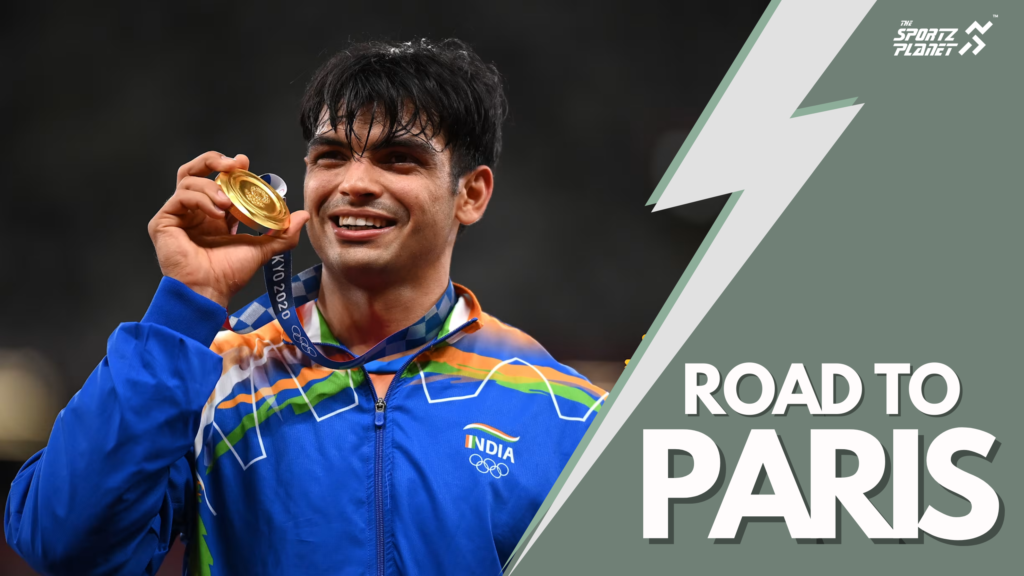
With less than a month left before the start of Paris Olympics 2024, Neeraj Chopra is diligently working away from the public eye, fine-tuning his technique. Concerns have been raised about his limited competition participation this season, but Chopra remains confident in his decision to prioritize his health over frequent competitions. Prioritizing Health Over Competition “This is the time to fix and improve things,” Neeraj told ESPN in an exclusive conversation. He explained that his current training regimen in Saarbrucken, Germany, has shifted to high-intensity sessions designed to peak his performance for the Olympics. “My workouts are less in volume now but will be at a high level, and my body will be at its peak.“ Addressing Groin Injury Concerns Chopra’s main focus has been on reducing the impact on the groin muscle of his blocking leg, crucial for transferring momentum during his throws. A groin injury had sidelined him from the Commonwealth Games last year and resurfaced in May, causing discomfort in his adductor. To mitigate this, he has limited his competitions to just three this year, compared to five before the Tokyo Olympics. Experience Brings Wisdom Reflecting on his journey, Chopra noted that his mindset has evolved since the Tokyo Olympics. “Back then, if I had an entry in a competition, I would definitely go and compete no matter what happened. But now, with more experience, I am better placed to make correct decisions,” he said. This maturity has led him to prioritize his body’s health and pause training if he feels discomfort. Strategic Competition Participation Neeraj Chopra’s selective participation saw him withdraw from the Ostrava Golden Spike in May and skip the Paris Diamond League. His performances at the Federation Cup (82.27m) and the Paavo Nurmi Games (85.97m) were among his lowest since becoming Olympic champion, but these were strategic decisions. “At the Federation Cup, I didn’t really feel I needed to perform. Bhubaneswar’s heat and the travel made it difficult to give my 100%.“ Building Confidence for the Runway The groin injury necessitated a break in his training, however Chopra returned to compete at the Paavo Nurmi Games, focusing on his body’s response rather than the throw distance. “I was slow on the runway compared to my normal speed. I want that speed back and for that, I need proper confidence that I am fully fit.“ Looking Forward to Paris Despite a mixed season, Chopra’s 88.36m throw at the Doha Diamond League ranks #4 globally in 2024, underscoring his potential. He remains positive and enjoys the routine of an athlete’s life, even finding humor in its repetitiveness. “We follow the same routine for a long time and repeat the same things time and again. We workout, eat, hydrate, sleep, and do it all over again. But I enjoy it.“ As Neeraj Chopra continues his preparations, Indian fans can take comfort in his focused and strategic approach, ensuring he will be at his best when it matters most in Paris. The Sportz Planed Desk,Athara Shetye
Paris Olympics 2024: Tourists Ideal Getaways When Not Watching Summer Games

As the Paris Olympics 2024 approaches, many tourists from around the globe are planning their trip to the city of light. Over 15 million people are expected to visit Paris for the 2024 Summer Olympics, which will be held from July 26 to August 11. Apart from witnessing the games live, the tourists would eye to escape the busy city of Paris and head to quieter parts of France. Luckily, there are plenty of places in and around Paris where the tourists can slow down and enjoy French culture. Here are some suggestions for quick getaways. The Pompidou Center The Pompidou Center, with its unique inside-out architecture, has been a major contemporary art venue since the 1970s. For a culture break, visit its “Comics on Every Floor” festival, featuring five exhibitions on American comics, Asian mangas, and European trends. French graphic novels are popular, with exhibitions on local stars like Hergé and Catherine Meurisse. Kids can enjoy an immersive installation by Marion Fayolle. Note that the Pompidou will close from 2025 to 2030 for renovations. The Catacombs When the city gets too crowded or hot, head underground to the Paris Catacombs. This maze of old mining tunnels became an ossuary in the 18th century due to overcrowded cemeteries. Visitors can explore the eerie mile-long route with the remains of six million Parisians. Keep in mind, the Catacombs are not accessible for wheelchair users. The Louis Vuitton Foundation The Louis Vuitton Foundation, a contemporary art museum resembling a glass sailboat, offers a peaceful retreat. Unlike many venues, it hasn’t staged sports-related exhibitions. Instead, it features a retrospective on American artist Ellsworth Kelly and an exhibition on Matisse’s “The Red Studio.” The permanent collection includes works by Giacometti and Warhol. The tourists can also enjoy a stroll in the nearby Bois de Boulogne park. Madame Arthur Cabaret For a unique cabaret experience, visit Madame Arthur in Montmartre. This modern drag venue, reopened in 2015, features live performances with French translations of classic English songs. Madame Arthur is open Thursdays to Saturdays, with shows at 10:30 p.m., and transforms into a nightclub afterwards. Outside Paris The Franco-American Museum at the Castle of Blérancourt Blérancourt, a small town northeast of Paris, offers a quiet escape. The Franco-American Museum, established by Anne Morgan, commemorates American contributions during World War I. Stay at Hostellerie Le Griffon or the Château du Mont de Guny for a peaceful break. Nearby, explore historical sites like the Château de Pierrefonds. Provins Provins, a medieval town with a UNESCO World Heritage listing, is a short train ride from Paris. Known for its 11th and 12th-century architecture, it features cobbled streets, fortifications, and the newly restored city ramparts. Enjoy daily shows on falconry and medieval jousts during the summer. The Domain of Chamarande The Domain of Chamarande, south of Paris, combines a 17th-century castle with contemporary art exhibitions. Easily accessible by train, the estate offers bike and boat rentals. Explore outdoor art installations, including a pop installation by Laurie Charles and other immersive works. Deauville and Honfleur The Normandy coastline, two hours from Paris by train, offers contrasting experiences. Deauville is a glamorous destination with a casino, horse races, and a sandy beach. Nearby Honfleur is a peaceful harbor town with a rich artistic history, featuring galleries and Saint Catherine’s Church, the largest wooden church in France. Amiens Amiens, the capital of the Picardy region, is an hour from Paris and offers fewer tourists. Its Gothic cathedral is a UNESCO World Heritage site, and the town features museums and the Hortillonnages, a network of water gardens. The summer International Garden Festival showcases 50 installations by gardeners and artists, accessible by foot, electric boat, or rowing boat. Whether you’re someone looking to escape the Olympic hustle or someone seeking a break from the crowds, these destinations in and around Paris offer a perfect blend of culture, history, and relaxation. Your journey around Paris can be as diverse and enriching as the city itself. So, take a step back from the Olympic fervor and discover the tranquil and captivating escapes that lie just beyond the city limits. Also Read: https://thesportzplanet.com/paris-2024-olympics-delivering-digitally-deploying-responsibly/ The Sportz Planet Desk,Atharva Shetye.
Paris Olympics 2024: Summer Games Mascots Through The Years

The 2024 Paris Olympics official mascot Olympic Phryge, derives its name from the iconic Phrygian hats, symbolizing freedom and embodying allegorical figures of the French republic. Its design pays homage to these historical elements, aiming to inspire unity and celebration during the Olympic Games. Olympic mascots have grown from characters into symbols of unity and pride at each Games, from Waldi in Munich 1972 to Paris 2024’s Phryge. Reflecting host cities’ heritage and values, they capture the Games’ spirit and excitement. Continuing this tradition, mascots are beloved icons, bringing joy and celebration to athletes and fans worldwide. Olympic mascots are special characters created to represent the spirit of the Olympic Games. Since their introduction, these mascots have become iconic symbols that embody the values and culture of each host city and nation. Though the Olympics had mascots like Smoky – The Scottish terrier at the Los Angeles 1932 Summer Olympics or Schuss at the Grenoble Olympics in 1968, the official mascot for the Olympic Games was first released in Munich 1972. Let’s take a journey through the years to explore the fascinating history of the official Olympic mascots. 1. Waldi – Munich 1972The first official Olympic mascot, Waldi, made its debut at the Munich 1972 Summer Olympics. Designed by Otl Aicher, Waldi was a dachshund, symbolizing resistance, tenacity, and agility. Its colorful striped pattern reflected the vibrant atmosphere of the Games and became an instant hit among fans. 2. Misha – Moscow 1980Misha the bear became the mascot for the Moscow 1980 Summer Olympics. Designed by Victor Chizhikov, Misha represented the warm hospitality and strength of the Soviet Union. Misha’s cheerful demeanor and playful character captured the hearts of audiences worldwide, leaving a lasting legacy in Olympic mascot history. 3. Sam – Los Angeles 1984Sam the eagle was introduced as the mascot for the Los Angeles 1984 Summer Olympics. Inspired by the American bald eagle, Sam symbolized freedom, strength, and determination. Designed by Disney artist Bob Moore, Sam embodied the spirit of the United States and became a beloved figure throughout the Games. 4. Hidy and Howdy – Calgary 1988Hidy and Howdy, the polar bears, served as the mascots for the Calgary 1988 Winter Olympics. Designed by Sheila Scott, these playful siblings represented the friendly and welcoming spirit of Canada. Hidy and Howdy showcased the beauty of winter sports and the natural landscapes of the Canadian Rockies, captivating audiences worldwide. 5. Cobi – Barcelona 1992Cobi, a Catalan sheepdog, was chosen as the mascot for the Barcelona 1992 Summer Olympics. Designed by Javier Mariscal, Cobi’s unconventional appearance and playful personality reflected the artistic and cultural vibrancy of Spain. Cobi’s popularity soared during the Games, making it one of the most memorable Olympic mascots in history. 6. Izzy – Atlanta 1996Izzy, also known as Whatizit, was the mascot for the Atlanta 1996 Summer Olympics. Designed by John Ryan, Izzy was a whimsical, abstract character with a blue and teal color scheme. While initially controversial, Izzy aimed to embody the diversity and innovation of the United States, although its design received mixed reactions from fans and critics alike. 7. Syd, Olly, and Millie – Sydney 2000Syd the platypus, Olly the kookaburra, and Millie the echidna were the mascots for the Sydney 2000 Summer Olympics. Created by Matthew Hattan, these three native Australian animals symbolized the energy, enthusiasm, and diversity of Australia’s wildlife. Their vibrant personalities and iconic designs captured the essence of the Sydney Games, celebrating both sport and culture. 8. Athena and Phevos – Athens 2004Athena and Phevos, siblings inspired by ancient Greek dolls, were the mascots for the Athens 2004 Summer Olympics. Designed by Spyros Gogos, these characters represented the rich history and mythology of Greece. Athena, named after the goddess of wisdom, and Phevos, named after Apollo, the god of light and music, embodied the spirit of ancient Greek heritage and Olympic ideals. 9. Fuwa – Beijing 2008Fuwa, a group of five mascots representing the Beijing 2008 Summer Olympics, were introduced to promote the Olympic spirit and Chinese culture. Designed by Han Meilin, the Fuwa consisted of Beibei the fish, Jingjing the panda, Huanhuan the Olympic flame, Yingying the Tibetan antelope, and Nini the swallow. Each mascot symbolized an element of nature and conveyed messages of friendship and peace. 10. Wenlock and Mandeville – London 2012Wenlock and Mandeville were the mascots for the London 2012 Summer Olympics. Named after the villages of Much Wenlock and Stoke Mandeville, which are historically linked to the Olympic Games and the Paralympic Games, respectively, these characters were designed by Iris and Edward Heath. Wenlock and Mandeville’s futuristic designs and unique origins celebrated the spirit of both the Olympic and Paralympic Games. 11. Soohorang and Bandabi – Pyeongchang 2018Soohorang the white tiger and Bandabi the Asiatic black bear were the mascots for the Pyeongchang 2018 Winter Olympics. Soohorang, symbolizing protection and trust, and Bandabi, symbolizing courage and strong willpower, were chosen to represent South Korea’s culture and traditions. Designed by Kim Hyun, these mascots showcased the harmony between humans, animals, and nature. 12. Miraitowa and Someity – Tokyo 2020Miraitowa and Someity were the mascots for the Tokyo 2020 Summer Olympics, held in 2021. Miraitowa, derived from the Japanese words “mirai” (future) and “towa” (eternity), represented the future and innovation. Someity, named after a type of cherry blossom “Someiyoshino” and the English phrase “so mighty,” symbolized resilience and strength. Designed by Ryo Taniguchi, these mascots embodied the enduring spirit of Tokyo and Japan. 13. Olympic Phryge – Paris 2024The Paris 2024 mascot, Olympic Phryge, is named after the traditional Phrygian hats that symbolize freedom, echoing their historical significance as symbols of liberty and the French republic. This choice reflects a deep connection to French heritage and values, aiming to resonate with both national pride and international unity during the Olympic Games. The mascot’s design incorporates these themes, using vibrant colors and a dynamic form to inspire athletes and spectators alike, fostering a sense of inclusivity and celebration throughout the event. The Olympic mascots have evolved
5 Interesting Facts About Paris Olympics 2024

Paris is all set to welcome the world to the Summer Olympics from the 26th of July 2024 to the 11th of August 2024. The mega event is going to be the first post-pandemic event and is set to include 329 medal events across 32 sports. The games are scheduled to be held at Parris, France, and Tahiti, the largest island in French Polynesia. The events include equestrian racing at the Palace of Versailles, beach volleyball in front of the Eiffel Tower, and fencing at the Grand Palais. The audience attendance is already predicted to be in the millions. The opening ceremony itself is even making Olympic history. Also Read: Paris Olympics 2024: Check out the Net Worth of Top Indian AthletesFor the first time, it’s expected to happen outside of a stadium. A parade of athletes will travel on boats down the Seine, the river that runs through several Parisian neighborhoods. Here are 5 interesting facts about the Summer Olympics which are to be held at Paris 1. The official mascot of the Paris Olympics is… a hat.Previous Olympic mascots have included pandas, bears, and tigers, but Paris is one of the fashion capitals of the world. Perhaps that’s why their official mascot is the Olympic Phryge, a traditional hat that was once worn by French revolutionaries. It’s pronounced, “freege.” These hats have shown up on French coins and stamps. They are a symbol of freedom. 2. YouTuber Jake Paul will train with the U.S. men’s boxing teamWhile Jake Paul isn’t an Olympic athlete, he will gain some valuable experience at the Games this year. In September 2022, the notorious YouTuber and professional boxer announced a partnership with the U.S. Olympics. He will train with qualifying athletes at Team USA’s boxing home base in Colorado Springs, Colorado. In exchange, Paul will advise the athletes on how to build their followings on social media and document his experience online. 3. Olympic medals will contain iron once part of the Eiffel TowerThis year’s Olympic medals include a special part of Parisian history. Each Olympic medal will be infused with iron from the original Eiffel Tower, which was built for the 1889 World’s Fair. The pieces of iron were cut from parts of the tower that were replaced during renovations over the years and saved. To create these medals, the Olympics recruited Chaumet, a French luxury jewelry maker to infuse 18 grams of iron from the Eiffel Tower into other materials made from silver, gold, and bronze. Winning athletes in both the Paris Paralympics and the Olympics will receive these unique creations. 4. The Paris Metro has been equipped with over 3,000 translation devicesWant to go to Paris but don’t know how to speak French? Anticipating hundreds of thousands of visitors from all over the world, the Paris transit system, called RATP, found a solution. Workers at the city’s Metro system will be equipped with handheld AI translation devices that are able to translate between French and 16 different languages. These languages include English, Arabic, Mandarin and Korean, with text appearing on screen and read out loud for visitors. The handheld device is called Tradivia and has been given to over 3,000 ticketing agents who work at the booths in different subway stations across Paris. 5. The U.S. is already predicted to win the most medalsThe Paris Olympics hasn’t even started yet and people are already placing their bets. Nielsen’s Gracenote, which supplies statistical analysis for international sports leagues, predicts that Team USA will win the most medals at the Paris Olympics. The organization predicted that the U.S. would win 39 gold medals and 123 overall in 329 events. It will be updated monthly leading up to the Olympics. Gracenote also predicts China will come in second with 35 gold medals and 89 overall. Countries predicted to be in the top 10 for winning the most medals include Britain, Japan, France, Australia, Italy, Germany, the Netherlands, and South Korea. The Sportz Planet DEsk,Atharva Shetye.
Paris Olympics 2024: Check out the Net Worth of Top Indian Athletes

The Paris Olympics 2024 is fast approaching. The Indian contingent is all in readiness to win medals for the country at the grandest stage of them all. The athletes will be looking to make the country proud. There’s a lot at stake. Their years of hard work, and to perform and be the best athlete in their discipline. A medal not only ensures a rise in stature, but is also likely to increase their net worth as well. As the athletes get ready for the Paris Olympics 2024, this is a good time to know the richest Indian athletes going into the event. 1. Neeraj Chopra (Track & Field – Javelin) Neeraj Chopra, who won a gold medal at the Tokyo Olympics, has an estimated net worth of around $4 million / INR 33.24 crore. His earnings come from endorsements, government rewards, and prize moneyTop Brands Endorsed: JSW Group, VISA, Bharat Petroleum Corporation Limited. 2. Lovlina Borgohain (Boxing) Lovlina, a bronze medalist at the Tokyo Olympics, has an estimated net worth of approximately $1 million / INR 8.31 crore. Her income is largely from endorsements and rewards from various state governmentsTop Brands Endorsed: Adidas, Assam Education Department 3. Nikhat Zareen (Boxing) A world champion boxer, Nikhat Zareen’s net worth is estimated to be around $500,000 / INR 4.15 crore, primarily from her boxing career and sponsorship deals.Top Brands Endorsed: Adidas, NMDC (National Mineral Development Corporation), Lifespan 4. Manu Bhaker (Shooting) Manu Bhaker, a renowned shooter, has an estimated net worth of about $2 million / INR 16.62 crore. Her wealth comes from her achievements in shooting, government incentives, and sponsorships.Top Brands Endorsed: HealthShots, Performax Activewear 5. Avinash Sable (3000m Steeplechase) Avinash Sable, who has made significant strides in athletics, has an estimated net worth of around $200,000 INR 1.66 crore, mainly from his sports career and national incentivesTop Brands Endorsed: JSW Sports, Fast&Up These athletes are among the many who will represent India at the Paris Olympics, and their financial success reflects their hard work and the support they receive from endorsements and governmental rewards. The Sportz Planet Desk,Atharva Shetye.
Paris 2024: Toyota to end its $835 million sponsorship with the IOC after Paris 2024

With the 2024 Summer Olympics in Paris just two months away, the games might lose one of their biggest sponsors. According to a report from Japan’s Kyodo News, Toyota will end its sponsorship with the International Olympic Committee (IOC) after the Paris games. The report cited unnamed “sources close to the matter.” Toyota has not commented on the Kyodo report, according to media sources. Toyota’s deal, announced in 2015, is thought to be the largest sponsorship the IOC has ever signed. At the time, Japanese media said it was worth $835 million. Kyodo’s report says Toyota is unhappy with how the IOC has used the money. The car company thinks the IOC isn’t doing enough to support the athletes and promote the games. During the Tokyo Summer Olympics in 2021, the IOC was criticized for not supporting the mental health of its athletes. Toyota sources told Kyodo that they want to keep sponsoring the Paralympic games. However, the IOC requires sponsors to support all its events. Toyota is one of only 15 “TOP” sponsors in The Olympic Partner program, the highest level of sponsorship, limited to one company per industry. Other TOP sponsors include Coca-Cola, Samsung, Intel, Corona Cero, and Procter & Gamble. Toyota pulled its commercials from the delayed 2021 Tokyo Olympics, and its executives did not attend the opening ceremonies because of COVID-19 safety concerns. The Sportz Planet Desk,Atharva Shetye.
Paris Olympics 2024: How many hours of content will OBS deliver to the fans?

The countdown to the Paris Olympics has started. With less than 100 days until the quadrennial sports event, fans are expecting fast-paced action from the world’s greatest athletes. For the ones who will be there in Paris, it will be a surreal experience. What about those, who will not be able to make it to the French capital? Well, there is a solution in store, thanks to the Olympic Broadcasting Services or the OBS. The OBS has decided to up the ante, this time in Paris, and is ready to redefine the viewer’s experience in this global event. Reportedly, the OBS will deliver more than 11 thousand hours of broadcast coverage in Paris. This means the previous record of 10,200 hours set in Tokyo will be demolished in a few months. The broadcast will carry the story of the world’s best athletes freshly, in addition to recording the vibrant atmosphere in France, especially Paris. In addition, the OBS will also feature behind-the-scenes footage, comprehensive pre and post-competition coverage, and special interviews, to ensure that the fans can enjoy the games, from the comfort of their homes, across 200 countries. “These are Games that truly inspire and excite us, urging OBS to push the boundaries, not only in our broadcasting but also in the way we convey the stories of athletes, sports, the city, and the host country,” said Yiannis Exarchos, OBS CEO. Be it the advanced storytelling, enhancing the cinematic experience of the users through technology or even the incredible atmosphere from the stands, OBS is all set to make Paris Games a memorable experience for everyone involved in the games. Additional Features: