



Did You Know These 5 Benefits Of Walking?

Walking is one of the most natural forms of exercise, yet many people underestimate its numerous benefits. Benefits Of Walking Let’s explore five key benefits of walking, supported by sports science and biomechanics, especially considering the growing interest in sports science in India. Walking Improves Cardiovascular Health Walking is a very simple and effective exercise to make the heart stronger. Sports science research shows that regular walking helps improve circulation, reduces blood pressure and decreases the risk of heart disease. Brisk walking for 30 minutes a day can improve your cardiovascular health, as it enhances healthy blood flow and reduces cholesterol levels. In India, where lifestyle changes are making heart disease a leading cause of concern, this is of great importance. Walking Improves Mental Health Walking is also a potent activity for the mental health aspect. Sports science always proves that walking can minimize stress, anxiety and even symptoms of depression. When walking, your brain releases endorphins, the body’s natural mood boosters. Whether walking in nature or around your neighborhood, the physical activity combined with fresh air will lift your mood and clear your mind. Walking Keeps The Weight In Control One of the best exercises to either maintain or lose weight is brisk walking. Being low-impact, it’s easily adaptable for almost everyone and easily fitted into daily routines. Findings from biomechanics research studies show that a regular and consistent walking activity does help increase the amount of calories burned over time. As such, gradual weight loss is achieved without straining much in doing more intense exercises. Walking Helps In Strengthening Of Muscles And Bones Regular walking helps to strengthen the muscles in the legs, hips and lower back and is also good for the bones. According to biomechanics studies, weight-bearing activities such as walking stimulate bone growth and help prevent bone density loss, which is crucial in the fight against osteoporosis, especially in older age. This is increasingly becoming a concern in India, where the aging population is increasing. Walking Enhances Balance And Coordination Biomechanics research shows that walking improves balance and coordination by integrating various muscles and stabilizing the core muscles. Regular walking over time refines body posture, reducing falls. It is highly beneficial for older people, who often suffer from declined coordination and balance. The benefits of walking in terms of motor skills are well known to sports science communities, such as in India, where health measures are focused on preventative care. Walking is easy and has health benefits for the body and the mind. With the understanding of sports science and biomechanics, the full benefit walking brings to people is now being comprehensively realized. So whether it is India or any other place, a 20 minute brisk-walk daily, will bring the necessary health benefits. The Sportz Planet Desk,Atharva Shetye
Hon’ble MoS Smt Raksha Khadse releases “Beyond the Field: India’s Sportstech Evolution” report by FIFS & Deloitte

New Delhi, February 13, 2025: Honourable Minister of State for Youth Affairs and Sports, Smt. Raksha Khadse, today released the insightful report titled “Beyond the Field: India’s Sportstech Evolution,” a collaborative effort between the Federation of Indian Fantasy Sports (FIFS) and Deloitte. The launch event, was attended by some of the prominent dignitaries, industry leaders, and sports professionals like Secretary (Sports) Smt. Sujata Chaturvedi, FIFS Director GeneralJoy Bhattacharya, Deloitte Partner Prashant Rao and FIFS CEO Neil Castelino, marking a significant milestone in understanding the evolving role of technology in shaping India’s sports landscape. Smt. Raksha Khadse, in her address, welcomed all participants and acknowledged the remarkable collaboration between FIFS and Deloitte in producing this comprehensive report on fan engagement and sports technology. The MoS highlighted India’s rapidly evolving sports ecosystem, fueled by various government initiatives like Khelo India, SAI National Centres of Excellence (NCOEs), TOPS (Target Olympic Podium Scheme), ASMITA, and KIRTI, along with the nation’s commitment to promoting fitness through the Fit India Movement. Role of Technology in Transforming Sports Smt. Khadse emphasized the pivotal role of technology in advancing athlete performance, fan engagement, and the overall growth of the sports sector. She noted that India’s rise in sports consumption, driven by digital platforms, OTT streaming, fantasy sports, and social media, has provided new opportunities to increase fan engagement, which is essential for making sports a mass movement. The report sheds light on how emerging technologies such as wearables, athlete management systems, and sports science tools are revolutionizing athlete training, injury prevention, and performance analysis. The MoS stressed that smart stadiums, along with Augmented Reality (AR) and Virtual Reality (VR) experiences, are enhancing both in-stadium and virtual fan engagement, making sports more immersive and interactive. Private Sector and CSR Contributions Smt. Khadse also acknowledged the crucial role of the private sector in the growth of sports in India. Through Corporate Social Responsibility (CSR) efforts and strategic collaborations, leading corporations have significantly contributed to the development of various sports disciplines. Notable partnerships include NTPC for archery, REC for athletics, ONGC, Reliance Foundation, and Glenmark, among others. She also highlighted recent initiatives like Odisha’s Naval Tata Academy, JSW Sports Centres, and Olympic Gold Quest (OGQ), which have furthered the cause of sports in India, offering world-class training and facilities for athletes. Public-Private Partnerships and the Role of Startups The Minister emphasised the need for continued public-private partnerships (PPP) to drive further innovation and growth within the sports-tech sector. She pointed out that government initiatives such as Startup India and Make in India are playing a critical role in fostering innovation and encouraging Indian entrepreneurs to create homegrown sports technologies. The collaboration between industry leaders, tech companies, and academic institutions is crucial to ensuring that India remains a global hub for sports excellence, the Minister added. Regulatory clarity, she stated, will be vital to ensuring a fair and thriving sports-tech ecosystem. Future Outlook Smt. Khadse concluded by calling on stakeholders, investors, and entrepreneurs to join hands in shaping the future of sports in India. She praised Deloitte and FIFS for their efforts in producing this important report and encouraged continued discussions and policy recommendations that will drive the next phase of growth for Indian sports. “The Indian government is committed to nurturing a vibrant sports culture, one that reaches from the grassroots to the national level,” she said. “We are optimistic about India’s future in sports, and with continued collaboration, we will achieve excellence on the global stage.” The report launched today is expected to serve as a critical tool in understanding the intersection of technology and sports, offering valuable insights into how technology can further revolutionize sports in India.
How Drinking Enough Water Prevents Muscle Cramping?
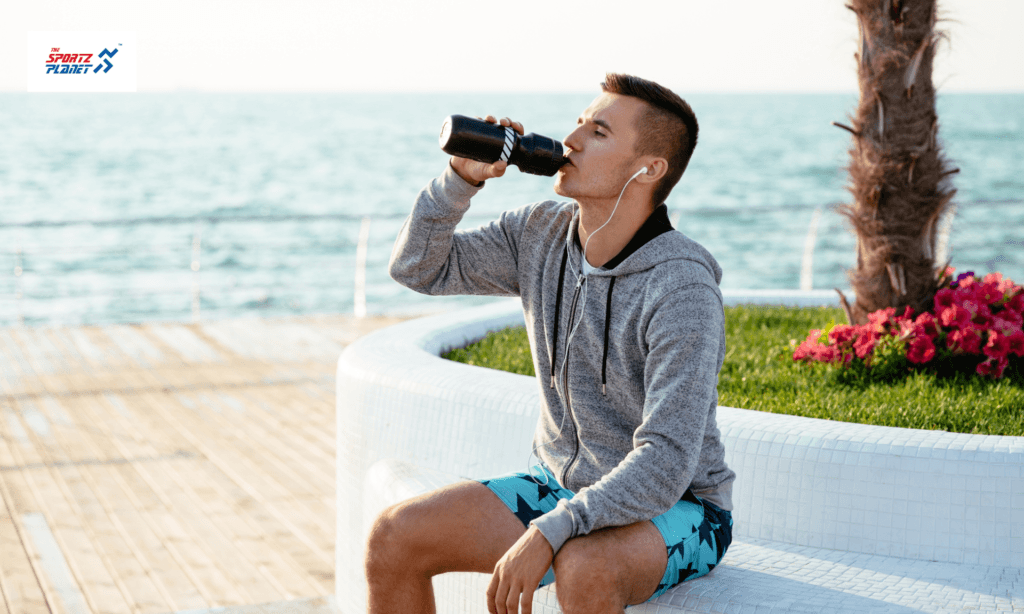
Muscle cramping during exercise is a common and frustrating problem for athletes and fitness enthusiasts alike. Fortunately, one of the best ways to avoid muscle cramps is by ensuring proper hydration. Water’s Role In Preventing Muscle Cramps Water is essential in muscle functioning, and learning about its interaction with cramping prevents successfully tackling issues of performance and discomfort at times in workouts. Hydration and Electrolyte Balance Water is also the solution to preventing cramps. Hydration ensures that the electrolytes in the body are at the right balance for muscle contractions. However, dehydration will disrupt this balance of electrolytes, especially sodium, potassium, and magnesium. Without these minerals in the proper amount, the muscles become more susceptible to cramping. Water helps to transport these electrolytes throughout the body, ensuring that muscles receive the nutrients they need to function properly during physical activity. Role Of Sports Science In Hydration In the field of sports science, the establishment of hydration to cause prevention of muscle cramps has been recognized for long. Studies have demonstrated that this factor is sufficient in preventing occurrence among athletes who drink adequate amounts of water amounts both before, during, and after one’s exercise. The muscles would experience less blood supply, quickening their fatigue due to dehydration. Maintaining the body’s optimal blood circulation to its muscles enables them to function at an optimal level. Role Of Nutrition In Preventing Cramps Along With Water Nutrition is also important in preventing cramps, but it has to be used in conjunction with water. A balanced diet that contains electrolytes will help minimize the chances of cramping, but if there is no sufficient water to carry these nutrients to the muscles, then the impact is minimal. Water serves the body to absorb and distribute minerals needed to help the muscle operate effectively. Therefore, although consuming foods rich in potassium, such as bananas or magnesium, including foods like spinach is important, nothing can substitute for proper hydration. The Enhanced Demand of Water With Sports Activity It is known in sports science that the body needs more water with increased physical activity. Water is lost as it causes the sweating which thus demands to be replenished to ensure hydration. Insufficient water can lead to dehydration, and therefore, cramping may arise. The athletes need to pay attention to their water before engaging in exercise activities and after carrying out the exercises in order to avoid this. The easiest yet most effective way to avoid cramping is to ensure drinking enough water during physical activity. Hydration of the body ensures muscle function, avoids fatigue, and decreases the likelihood of cramping. Water intake has been at the center of discussions on sports science and nutrition for supporting the entire athletic performance. The Sportz Planet Desk,Atharva Shetye
Biomechanics Applied While Playing Badminton

Badminton is a racquet sport played by two or four individuals and features every match with rapid short-duration actions. History Of Badminton Having launched in India in the late 19th century at the time of British colonialism, badminton has evolved into a game that calls for excellence in technical, tactical, physical and mental arenas for elite-level performance. In the past two decades, application of sports science has revolutionized the development of performance in international badminton competitions. How Badminton And Biomechanics Are Related? Badminton has thus played a vital role in the science of understanding and improving performance in sports, especially through biomechanics-the science of human motion. It is believed to be one of the best methods for the understanding of the athlete’s technique of performance so that it would be enhanced as much as one could increase the former and minimize the latter. For instance, in badminton, optimization of the execution of the stroke helps one to understand the endurance demands and to enhance general fitness. Badminton Power Strokes Biomechanics The field of study has entailed a tremendous shift from the past views founded on a better knowledge regarding the biomechanics of power strokes in badminton. The early researchers suggested that the strokes, particularly the power strokes, were initiated by the wrist snap, however, the recent biomechanical studies have negated the above scenario. It has been seen in different studies that forearm rotation plays a significant role in the generation of power and contributions arise from the movement of the radioulnar pronation, elbow extension, and ulnar deviation at the wrist. More research on this topic went further to quantify the contribution of various joints toward shuttle velocity during the smash stroke. Shoulder rotation and radioulnar pronation are significant contributors, with a contribution toward the shuttle speed of 53%. This finding established a drastic deviation from the traditional emphasis in stroke mechanics that focused around the wrist. It has been discovered that world-class players take enormous amounts of power in the underarm forehand and clear serve by pronating the forearm and rotating the upper arm medially while backhand clears are dependent on forearm supination and upper arm lateral rotation. Although the contribution of wrist motion has been reduced, further research is needed to determine the muscle groups that contribute to the power of these shots. Biomechanics Applied During Forehand Overhead Jump Smash The forehand overhead jump smash is one of the most important and aggressive strokes in badminton. Research on this stroke revealed that higher elbow angular velocity is correlated with higher shutter speeds during a jump smash. The timing of muscle activity is also important for the optimal performance of a smash. Studies on the temporal-spatial relationship between muscle activity and the execution of the smash have indicated that the control of distal muscles in the upper limb is critical for accuracy and speed. Comparative studies on forehand and backhand strokes have pointed out key biomechanical differences in angular velocities and muscle activation. Skilled players have been reported to produce very high angular velocities in the actions of glenohumeral external rotation, elbow supination, and wrist extension when playing a backhand stroke. The relative difference was lesser in the forehand stroke. This would therefore indicate the fact that although players often tend to play the forehand stroke more often, players put much focus into developing their backhand throughout their careers. A comprehensive analysis of surface EMG activity shows that a jump smash requires greater EMG activation prior to the shuttle contact than a regular smash to ensure that muscle activation is achieved before impact to attain high shuttle velocities. Biomechanics Applied During The Backhand Overhead Strokes Among these backhand overhead strokes, such as smash, clear and drop shot, biomechanical studies of smash have advanced the understanding of stroke execution. Recent researches have proved the extension of angle of the shoulders and angular acceleration of the wrists during the initial phase of a given stroke can provide greater shuttle speeds. These suggestions are of critical importance for competitors interested in their backhand overhead strokes and technique to perform better. Biomechanics Applied During The Forehand Serves The biomechanical analyses of the forehand serves have also been done on the comparisons between the long and short serves. It was found that there were three principal variables, namely: elbow angle, shuttle height at contact, and shuttle trajectory after launch. All these differences are important since they relate to how max height is achieved at which the shuttle travels and hence the effectiveness of the serve. For instance, the biomechanical variables, such as elbow angle and shuttle height, form the basis on which players base their strategic planning in service techniques. Biomechanics During General Endurance And Fitness In Badminton General endurance and physical fitness are essential to badminton performance. It has been noted that muscular endurance and explosive muscle strength are essential, particularly in the lower body. Research done on the strength of the knee extensor (quadriceps) and flexor (hamstrings) indicates that lower extremity musculature is critical in providing for the quick, forceful movements necessary throughout a match. Maximally developing strength and explosive strength through isometric muscle contractions are critical in producing powerful movements and recovery between points. Intermittent A badminton match imposes high demands on both the aerobic and anaerobic energy systems. Research has indicated that 60-70% of energy for a match is derived from the aerobic system and 30% anaerobically metabolized. The alactic anaerobic metabolism pathway is more prominent in the context of high-intensity explosions; here, explosive strength and fast recovery are of utmost value. Biomechanics is one area of sports science that can give unique insights into optimal performance. Its application in this sport can make it possible for athletes and coaches to optimize stroke mechanics, from power strokes through the forehand overhead jump smash, backhand strokes, to serves. Also, knowledge in the demands of general endurance and fitness-the biomechanics experience-would be a basis for building the physical capacity needed to perform at the elite level by athletes. As research in sports
Types Of Wearable Technology In Sports

Wearable technology has been in high demand in recent times in sports. What Is Wearable Technology? Wearable technology in sports is the advanced electronic devices that athletes wear to monitor their performance, health and physical condition. Some of these include GPS trackers, heart rate monitors and motion sensors. Data is collected in real time for the purpose of helping athletes and coaches optimize performance, improve training efficiency and minimize risks of injury. Types of Wearable Technology In Sports Wearable technology in sports includes devices that capture performance metrics deemed important by athletes. The most common types of wearable devices in sports are as follows: 1. GPS Trackers There exist GPS trackers, which analyze movement patterns of professional athletes either in training or competition. The device records real-time speed, distance and positioning data to enable the coach or athlete to deduce movement, observe performance and develop a strategy for improvement. 2. Heart Rate Monitors Probably the most important monitoring device which an athlete could carry is the heart rate monitor. Real time heart rate monitoring allows one to know how much exertion has been expended and recovery time and fitness levels. Coaches will be able to tailor training to appropriate intensity while avoiding overtraining and the attendant risks of injury based on such information. 3. Motion Sensors Acceleration sensors will follow the type of move an athlete could make; for example acceleration, deceleration, or changes in the direction. These provide athletes with insight into how quick and responsive they are, because these are really huge factors to sports that may require rapid adjustment in movement change and turning in direction. Defects in a movement determine if a motion sensor enables athletes to amend their form; hence, thus limiting the risk for injury. 4. Accelerometers Accelerometers measure the rate of an athlete’s acceleration and deceleration, therefore delivering very rich information about explosive movements. In such sports as football, basketball, or rugby, it can be truly important to analyze these rapid acceleration-deceleration actions. An athlete may even be measured by the degree to which power and explosiveness is present in an athlete’s capability to accelerate and decelerate. 5. Wearable Cameras First-person views of performance are gained using wearable cameras installed on a helmet or a jersey. It combines very well with American football and ice hockey as tactics is such a strong ingredient in the overall game. As for the captured video, further improvement can also be seen through strategic planning side by side situational awareness at the time of the game. 6. Smartwatches and Fitness Bands The smartwatches and fitness bands are versatile wearables that can monitor virtually every metric of health and performance, whether it’s your heart rate or the number of steps taken or calories burned in a workout. Such gadgets can be very handy for amateur athletes but also use them as pros to get essential data. This multifunctionality and ease of use is why such gadgets remain popular among the athletes in each field and enable them to possess an easily available tool for fitness tracking and assessment of performance. This would transform sports, as it delivers highly accurate actionable insights that may be used both to enhance performance as well as minimize the risk of injury. Or in other words, such technologies are likely to expand their penetration significantly into the space of training, strategy and recovery within sports. The Sportz Planet Desk,Atharva Shetye
Wushu Features At The 38th National Games

Wushu is one of those sports, which is featured during the 38th National Games, Uttarakhand. A Bit About Wushu Wushu is a perfect blend of athletics, disciplined manners and some ancient technical skill that forces people to live a moment gracefully along with strong vigor. History And Evolution Of Wushu The term “Wushu,” literally translated from Chinese to mean “martial technique,” dates way back in the Qin Dynasty, making it one of the oldest martial arts found anywhere in the world. It evolved from being a military training technique to a sport that falls under the regulation of the International Wushu Federation (IWuF), which was founded in 1990 for unifying all disciplines of Wushu found in the world. There are two major disciplines of Wushu: taolu and sanda. What Is Taolu? Taolu is the “routines” discipline where the practitioner exudes agility, precision, and beauty as choreographed movements. They are measured according to how fast and how accurate the pace at which one executes moves or transitions when their axes, swords, or staffs, or they themselves are bare-handed. Among all of the forms, taijiquan remains to be the favorites among the contenders as it will reveal artistry and a very deep culture related with proficiency for martial arts technique usage. What Is Wushu? On the other hand, sanda or Wushu combat is where techniques of grappling, striking, and kicking exist. It is more fighting sports like judo or taekwondo where athletes compete within weight classes with technical ability combined with great physical strength. The match in sanda is an entertaining exercise full of action with much endurance and thoughtful tactical thinking. Wushu At The 38th National Games The 38th National Games would go a long way in the promotion of Wushu at the National level as well as bringing out its martial heritage coupled with the modern competitive format. Where athletes shine with their taolu skills as well as with the demonstration of sanda, the event would promise to come out with all the versatility and depth of Wushu as well as to inspire the generations of martial artists all over India. The Sportz Planet Desk
Reliance Industries (RIL) Acquires 49% Of Oval Invincibles

Reliance Industries Limited, parent company of Mumbai Indians, signed a deal with the Oval Invincibles of The Hundred, acquiring a 49% stake in the franchise, valued at 123 million pounds sterling for the entire team. Reliance will pay 60 million pounds sterling for the total equity of 49 percent. Reliance Industries (RIL) Diversifies Cricket Business Portfolio The acquisition of the Oval Invincibles is a major step by RIL as an expansion of its cricket franchise, which it has already invested in on other frontiers: Mumbai Indians (IPL and WPL), MI New York (MLC), MI Cape Town (SA20) and MI Emirates (ILT20). The sixth team under the RIL Banner will add momentum to the Company’s global cricket presence-the Invincibles. Also Read: WPL 2025 Auction: What Do Each Team Need? Intense Competition And Acquisition Terms Their bid defied strong competition from a Silicon Valley tech consortium comprising Google’s top executive, a senior Microsoft executive and the head of Adobe, not to mention private equity giant CVC. According to reports, RIL’s final bid valued the Invincibles at £123 million, with the company’s 49% stake costing just over £60 million. The ECB has yet to officially confirm the successful bidders, though an announcement is expected next week. Oval Invincibles – A Strong Brand One of the most successful brands that came under The Hundred was Oval Invincibles. Similar to men, they took away consecutive titles for The Hundred, and their women’s teams also won two consecutive titles for each respective The Hundred. This epitomised success and attracted the gaze of investors. RIL came out as one of the strong contenders for English cricket. Surrey To Retain Majority In Invincibles Even with new investment by RIL, though, the control of the Surrey, the owner of the franchise Invincibles will not be going as the county club had stated early on that they would hold to the majority percentage of their equity even as host venues were granted the option for selling 51% of it in the privatisation process provided by the ECB. Knighthead Capital To Buy Birmingham Phoenix On the flip side, reports say, US-based hedge fund Knighthead Capital won Birmingham Phoenix. It will be Knighthead’s first adventure in the world of cricketing after it had bought Birmingham City Football Club back in 2023. In addition, it is investing in the city in new developments including a “sports quarter.” A Year Of Transition For The Hundred This might just be another exciting turn of things in The Hundred as RIL comes in and replaces the Invincibles. This will definitely be a transition year for the tournament, at least for 2025 which falls between August 5th to 31st. ECB was actually not looking to go head to head with Major League Cricket; one could see how all this was going to be playing out into the future. As the season progresses, little other than a lead story should be written inside the embryonic narrative of The Hundred as these big-name ownership deals start to have their say. The Sportz Planet Desk,Atharva Shetye
No Captain’s Event Or Photoshoot Before Champions Trophy 2025

The PCB confirmed that no official ICC captain’s meet or photoshoot would precede the ICC Champions Trophy 2025. No Captain’s Event For Champions Trophy 2025 For the first time, the Champions Trophy will be skipped in the buildup to the event in Pakistan. The host nation usually organizes this meet in the host country. In the case of the first ICC event in Pakistan after 1996, i.e. the Champions Trophy 2025, the usual meet would be skipped. Reasons Behind The Logistical Challenges Unlike the Champions Trophy in 2017 that took place in the UK where there was a captain’s event and photoshoot, this tournament will not repeat the same this year. According to the PCB, there was no plan for an opening ceremony, further revealing that neither the ICC nor the PCB had planned one. However, the PCB will host a special event on February 16 in Lahore three days before the opening match to mark the tournament. The reason for not attending the captain’s event and photoshoot was logistical. The tournament will be played in four venues across two countries, and with tight schedules for teams, many will arrive in Pakistan close to the start of the tournament. In fact, Australia’s team will not reach Pakistan until February 19, the day of the opening match. Effect On India’s Participation This also provides a fillip to the debate over India playing in the captain’s event. India and Pakistan have not played any bilateral series since 2012 due to political tensions and have met each other only at ICC events. Under the tournament’s hybrid model, India’s matches, which will include the final if it reaches there, will be staged in Dubai. Glorifying Renovated Grounds In a further buildup of the excitement, the PCB has planned ceremonies at the completion of refurbished stadiums in Lahore and Karachi. Gaddafi Stadium in Lahore, under renovation, will be inaugurated by Prime Minister Shahbaz Sharif on February 7, 2025 and National Stadium, Karachi, by President Asif Ali Zardari on February 11, 2025. This will indeed mark the start of a keenly awaited tournament in Pakistan. The Sportz Planet Desk,Atharva Shetye
Role Of Sports Science At The 38th National Games

With more than 10,000 athletes from all over the country performing at what is among India’s highest-profile sports events, 38th National Games have shed light on the growing importance of sports science in competitive athletics. At every turn in the games, sports science professionals including physiotherapists, biomechanists, team doctors, and nutritionists are working seriously to enhance athletes’ efforts and wellbeing. Sports Science At The Helm Of The 38th National Games Since sports science stepped to the helm of Indian sport, the 38th National Games mark an even deeper significance placed upon it because today the athletes get a multidisciplinary support system along with the maximum care being taken care of by a team and strategies to bring them to peak performance. From physical demands for running and swimming to mental concentration needed in some disciplines like archery and shooting, sports science works shoulder by shoulder with athletes as never before, helping them in their endurance-the physical, as well as the mental. Physiotherapists And Team Doctors Physiotherapists and team doctors are highly essential for the successful conduct of the 38th National Games. Their first and foremost responsibility is to see that the athletes are physically fit for competition and free of preventable injuries. With the precision required in determining the proper time for all the treatment and rehabilitation before competition begins, successful athletes need to recover quickly, down to having an experienced sports doctor treating each competitive event to assure their today-plateau finish. Rehabilitation and injury prevention comes into play with the help of physiotherapists, allowing athletes to recover from the rigors of events in a very short time so they remain fit and compete for a greater duration of the tournament. Biomechanics And Performance Optimization Biomechanics experts have become indispensable at the 38th National Games, providing insights into athletes’ movements, postures and techniques. By analyzing these elements, biomechanists can recommend improvements in form and technique, which can lead to better performance and reduced risk of injury. Whether it’s optimizing a sprinter’s stride or refining a swimmer’s stroke, biomechanics ensures that athletes can perform at the highest level while minimizing strain on their bodies. Nutritionists Fueling Performance At The 38th National Games Nutrition is another critical pillar of sports science at the 38th National Games. Nutritionists work closely with athletes to design tailored meal plans that fuel their bodies for peak performance and recovery. Proper nutrition ensures that athletes maintain energy levels, muscle mass and mental clarity during the competition, contributing significantly to their success in the games. Sports Science Drives Success At The 38th National Games At the 38th National Games, sports science is not just a supporting element; it is a cornerstone of athletes’ success. The contributions of physiotherapists, biomechanists, team doctors and nutritionists are transforming how athletes train, compete and recover, ensuring that they reach their full potential. As the 38th National Games continue to unfold, the integration of sports science ensures a new era of excellence in Indian sports. The Sportz Planet Desk
Is Sports Science The New SOS For An Athlete?

Discussing the evolution of sports science with its importance for an athlete in the National Games Conclave on January 29, 2025, was a very insightful discussion. Sports Science – The New SOS This panel included Manasi Joshi, who represents India in para-badminton. Manasi related her personal experiences, showing light on how she overcame what could have otherwise been a finishing blow to an injury through the help of physiotherapy. The Injury Before reaching the finals of the World Championship, Manasi Joshi was unable to get up during her warm-up due to extreme back pain. She pushed through the searing ache by taking painkillers and went on to play in the finals. However, after the event, medical scans revealed that three of her vertebrae were protruded, a condition which could have caused long-term damage. Role Of Sports Science In Recovery It is here that the utility of sports science was seen. With a focused team of sports professionals—physiotherapists, biomechanics experts and more—she initiated a specific recovery program. Physiotherapy was done individually for her to treat not only the pain at the moment but also to make the muscles around the area stronger and improve her posture to avoid any further damage. How Sports Science Helped Her Recover Fast It was just three months since Manasi Joshi was back on the field after this remarkable recovery. She testified that the intervention of sports science helped her to bounce back and credit his success to the dedication involved in his physiotherapy program. Manasi said that support from sports science would not only be a period of treatment during the recovery phases but also in the prevention of injuries in the long run. Future Of Sports Science In Athlete Recovery Manasi Joshi’s story depicts transformation through the aspect of sports science on the road of an athlete. Recovery with physiotherapy is essential so that the person can come back to top-notch performance without future injury risk and that integration of sports science into the lifestyle of the athletes is more imperative than ever for them, elevating recovery possibilities to levels considered impossible previously in terms of performances. The Sportz Planet Desk